










Bringing Fountain Pens on Flights: What You Need to Know
Can fountain pens go on planes? Yes — you can bring fountain pens when you travel, but you should prepare them correctly. If you love writing with a fountain pen, a little planning prevents leaks, nib damage, and hassles at security.
When you're traveling with fountain pens, understand how cabin pressure affects ink, follow TSA guidelines for ink bottles and carry-ons, and pack your pens in a protective case so they arrive ready to write.
Key Takeaways
- Know the TSA rules for carrying fountain pens on flights and how ink bottles fit the liquids policy
- Take simple precautions when packing fountain pens for air travel to avoid leaks and damage
- Understand how cabin pressure can cause leaks so you can minimize risk
- Use best practices for writing and handling pens during the flight
- Plan for international travel — check destination rules and declare valuable pens when required
See Appelboom's travel-ready fountain pens and protective cases: Appelboom travel pen cases .
The Unique Challenges of Traveling with Fountain Pens
Fountain pens bring a superior writing experience, but they also bring unique vulnerabilities when you travel by air. Understanding how pressure and handling affect your pen will help you prevent messy surprises.
Why Fountain Pens Require Special Consideration
Fountain pens are sensitive to cabin pressure and pressure changes during climb and descent. Changes in air pressure can force ink out of a reservoir or cartridge if the pen isn’t prepared properly, and some filling systems are more prone to issues than others.
When you fly, those pressure shifts can affect ink flow, cause blobs or feathering on paper, or—in worst cases—lead to leaks that damage clothing and luggage. That’s why you should handle and prepare pens intentionally before a flight.
Common Issues Faced During Air Travel
Travelers most often report three problems: ink leaks, clogged nibs, and physical damage to the pen body or nib. Leaks usually happen when trapped air expands inside a filled chamber and pushes ink out; clogged nibs can result from dried ink after inconsistent use; damage comes from poor packing or impact.
To reduce risk, follow a few straightforward steps before you depart.
- Partially empty or use down to a lower ink level if possible—less ink = less potential to leak.
- Store pens nib-up inside a protective case to keep any escaping ink from reaching other items.
- Use a hard or padded protective case rather than tossing pens loose in a bag.
For practical maintenance steps and troubleshooting, see Appelboom’s pen-care guide: how pressure affects pens & ink maintenance.
How Cabin Pressure Affects Fountain Pens
Flying with fountain pens means dealing with changing air pressure as the aircraft climbs to cruising altitude and descends. Cabin pressure is lower than ground pressure; as trapped air expands, it can push ink out of weak seals or around the nib.
The Science Behind Air Pressure Changes
Atmospheric pressure falls with altitude. In an airplane cabin the pressure is reduced compared to sea level (airline cabins are typically pressurized to the equivalent of several thousand feet above sea level). That drop allows any trapped air in the pen’s reservoir, converter, or cartridge to expand, which can in turn force ink out.
Why Fountain Pens Leak During Flights
Leaks during flights are most often caused by expanding air inside the pen, poor seals, or a very full ink chamber. Temperature shifts and rough handling can worsen these effects. Pens with tight, reliable seals and lower ink volumes are less likely to leak at altitude.
Simple preparation—cleaning, reducing ink level, and packing in a protective case—greatly reduces the chance of a mess during your journey. For protective cases and travel accessories, check Appelboom’s selection: protective cases & sleeves.
Can Fountain Pens Go on Planes? TSA Regulations Explained
The Transportation Security Administration (TSA) allows fountain pens on planes, but knowing the rules for carry-on vs. checked luggage and how ink bottles are treated will save you time and headaches at the checkpoint.
You can bring fountain pens in both carry-on and checked bags, but follow sensible packing and liquid rules to avoid problems.
Official TSA Stance on Fountain Pens
TSA permits fountain pens in carry-on baggage. Be prepared for security screening: keep pens accessible in a protective case so officers can inspect them quickly. If you carry bottled ink, treat it like any other liquid under TSA rules.
Carry-On vs. Checked Baggage Rules
When deciding between carry-on and checked luggage, consider both safety and leakage risk:
| Baggage TypeTSA RegulationsRecommendations | ||
| Carry-On | Fountain pens allowed; bottled ink must follow liquid rules | Keep pens in a protective case and stow ink bottles (≤3.4 oz) in a clear quart-sized bag for screening |
| Checked | Fountain pens allowed, but checked luggage can subject pens to pressure, temperature changes, and rough handling | Wrap pens securely, use a hardcase, and consider carrying valuable or vintage pens in your carry-on |
Ink Bottle Restrictions
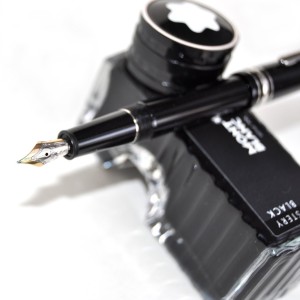
Ink bottles are considered liquids for carry-on screening. They must comply with the 3-1-1 rule: container size 3.4 ounces (100 ml) or less, all containers fit inside a single clear, quart-sized zip-top bag, one bag per passenger. Larger bottles should go in checked luggage or be left at home.
For the official TSA guidance on liquids and carry-ons, see the TSA website: TSA — What Can I Bring?.
Quick checklist before you go:
- Pack pens in a padded case and place it where security can access it.
- Place ink bottles (≤3.4 oz) inside a clear quart-sized bag for carry-on screening.
- Carry expensive or fragile pens in your carry-on rather than checked luggage.
Shop protective cases, travel kits, and travel-size inks at Appelboom: protective cases | travel ink & bottles. If you travel internationally, check airline and destination rules.
Preparing Your Fountain Pens Before Your Flight
To avoid damage or leakage, prepare your fountain pens before you travel. Simple prep keeps your fountain pen in working order and reduces the risk of ink stains in your luggage.
Emptying vs. Filling Your Pen
Deciding whether to empty or leave ink in your pen depends on the filling system and whether you plan to write during the flight. Emptying reduces leak risk but can be difficult with some systems; leaving a small amount of ink or using a cartridge is often a practical compromise.
Guidance by filling system:
- Cartridges: Best for travel — low leak risk and easy to swap inflight.
- Converter: Partially fill the converter (avoid a full piston-squeeze) or use a cartridge adapter so there’s less free ink to escape.
- Piston / Vacuum fillers: Harder to fully empty; if you must bring these, use less ink than usual or consider carrying them emptied in a sealed sleeve.
- Eyedropper pens: Highest risk for leaks — empty them or leave them at home.
If you plan to use the pen during the flight, a partially filled converter or a fresh cartridge is usually the safest option.
Proper Cleaning Procedures
Clean your pen before travel to remove old or dried ink that can clog the nib. For most fountain pens, flush with room-temperature water until it runs clear, then allow the pen to dry fully. For stubborn or pigmented inks, use a commercial pen flush following the manufacturer’s guidance.
Steps to clean quickly before a trip:
- Disassemble as recommended by the manufacturer.
- Rinse the nib and feed under a gentle stream or use a bulb syringe to flush water through the section.
- Repeat until the water is clear, then let parts dry on a lint-free towel (24 hours if possible).
Ideal Ink Selection for Travel
Not all inks behave the same at altitude. While blanket rules aren’t perfect, generally:
| Ink TypeLeakage RiskTravel Suitability | ||
| Pigment-based | Variable (can clog) | Often low — but may require thorough cleaning |
| Dye-based | Medium | Good balance of performance and travel suitability |
| Waterproof / Iron-gall | Low to medium (depends on formula) | Good for permanence but may need extra maintenance |
Choose inks you know and trust for travel. If you’re unsure, use a standard dye-based or a well-tested waterproof ink and avoid unfamiliar or heavily particulate inks right before a flight.
Replace images with useful resources: see Appelboom’s travel ink and maintenance products — shop inks & travel bottles and pen-care supplies.
Best Practices for Packing Fountain Pens
Packing your fountain pens correctly is one of the easiest ways to avoid leaks, nib damage, and lost pens. A little thoughtful positioning and the right case will keep your pens travel-ready.
Recommended Pen Cases and Sleeves
Choose a case that matches how many pens you carry and how fragile they are. Options that work well for travel include:
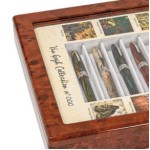
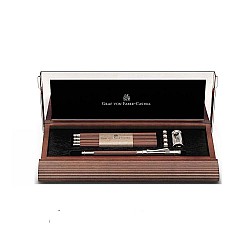
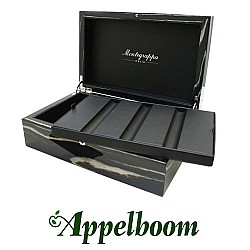
- Hard pen cases with individual slots — best for valuable or vintage pens because they prevent contact and absorb shocks
- Soft pouches with cushioning — lightweight and good for multiple everyday pens
- Snug pen sleeves or leather loops — ideal for a single favorite pen you want to carry on your person
When selecting a case, check material durability, internal padding, and whether slots or loops hold pens in place to protect the nib and body.
Orientation and Positioning in Luggage
How you position pens inside a case and bag matters. Follow these practical rules:
- Pack pens with the nib pointing upwards (nib pointing upwards) when possible — this reduces the chance of ink escaping into the cap or case.
- Place pens in individual slots or secure loops so they cannot rattle or impact each other.
- Keep pens in your carry-on if they are valuable or filled; checked luggage can be exposed to rough handling and more extreme temperature/pressure changes.
Protecting Expensive or Vintage Pens
For high-value or vintage pens, add extra padding (soft cloth wrap) and use a hard case. Consider carrying these pens in your carry-on and keep documentation or insurance appraisals handy if you need to declare value at customs.
Example packing configurations:
- Carry-on day kit: one hard case with 2–4 pens (nibs up), small bottle or cartridges in a quart bag, cleaning cloth.
- Checked luggage backup: pens emptied or secured in a padded roll, wrapped in clothing inside a hard-shell bag.
These simple steps will help you keep your fountain pen safe and ready to write when you reach your destination.
Using Fountain Pens During Your Flight
Using a fountain pen on a flight can be enjoyable, but you should be prepared. With the right pen, technique, and a small in-flight kit, you can write comfortably without creating a mess.
Safe Writing Techniques at Altitude
Air pressure and cabin conditions affect ink flow, so adopt gentle, controlled techniques:
- Write with a slight angle — not fully vertical — so the nib feeds consistently without forcing ink out.
- Keep the nib steady and use light pressure; heavy strokes increase the chance of blobs or skips at altitude.
- Choose a pen known for reliable flow under varying pressure (cartridge or well-sealed converters are good choices).
These small adjustments help you get consistent writing performance on the airplane without stressing the nib or risking a leak.
Handling Potential Leaks
Even prepared pens can leak. If that happens, act quickly to limit damage:
- Stop writing and close the pen cap (or remove the cartridge/converter if you can do so cleanly).
- Contain the pen in a sealed plastic bag or place it nib-up in a protective sleeve to prevent further leakage.
- Use a cloth or paper towel to blot ink from clothing or surfaces — don’t rub, which can spread the stain.
- If ink reaches fabric, remove loose particles and address it at your destination with appropriate cleaning advice.
Be discreet in the cabin: avoid working directly on delicate upholstery or important documents, and keep your cleanup items within easy reach.
| PrecautionBenefit | |
| Write at a slight angle | Reduces risk of leakage and blobs |
| Use a reliable pen (cartridge/converter) | More consistent ink flow at altitude |
| Keep a small cloth and zip bag handy | Quick containment and cleanup of spills |
For a compact in-flight kit (cloth, spare cartridges, small travel bottle, protective sleeve), see Appelboom’s accessories.
International Travel Considerations for Fountain Pen Enthusiasts
Traveling with fountain pens internationally requires a bit more planning than a domestic trip. Before you fly, check destination rules, be prepared to declare high-value items, and consider insurance for collectible pens — this will help you bring fountain pens without surprises at customs.
Country-Specific Regulations
Customs and import rules vary by country. Some destinations restrict certain materials (ivory, animal-derived parts) or impose import duties on high-value items. Always check the official customs website for your destination and, when in doubt, contact the embassy or a local pen retailer for advice.
Keeping a short list of destination-specific rules and paperwork (receipts, provenance, appraisals) makes moving pens across borders smoother. Local pen clubs and collector forums can also offer practical, up-to-date tips for specific countries.
Customs Declarations for Valuable Pens
If you’re carrying expensive or vintage pens, declare them when required. Failing to declare high-value items can lead to fines or confiscation. Have documentation ready: proof of purchase/value, photos, and any relevant appraisals. Consider temporary export certificates or an ATA carnet for very valuable collections if you’re traveling for exhibitions.
Insuring valuable pens and keeping them in a hardcase or protective sleeve reduces your financial and emotional risk while traveling.
Fountain Pen Models Best Suited for Air Travel
Some pens simply perform better on the go. When you want a reliable travel companion, look for robust construction, a dependable seal, and a filling system that matches your travel style.
Pens with Reliable Travel Performance
Travel-friendly examples include models with sturdy builds and reliable seals. If you’d like to shop these types, Appelboom carries many traveler-friendly pens:
- TWSBI (e.g., Diamond 580) — strong construction and a secure piston seal.
- Lamy Safari — durable plastic body and easy cartridge/converter options.
- Pelikan Souverän series — piston fillers with smooth performance (note: piston fillers hold more ink and may need partial filling).
Filling Systems That Travel Well
Your choice of filling system has a major effect on travel suitability. Here’s a quick comparison to help you pick:
| Filling SystemPros for TravelCons for Travel | ||
| Cartridge | Low leak risk, easy to replace in-flight | Limited color options |
| Converter | Flexible — use bottled ink when wanted; can be partially filled | Higher leak risk if full; requires more care |
| Piston / Vacuum | Large capacity, excellent seal when well-maintained | Harder to empty completely; more potential for pressure-related issues if full |
| Eyedropper | Simple, high capacity | Highest leak risk — generally avoid for air travel |
Budget-Friendly Travel Pen Options
You don’t need an expensive pen to travel well. Affordable options such as the Platinum Preppy offer reliable performance for short trips. For a step up, many travelers appreciate pens like the Namiki / Pilot Falcon for durability and flexible nib options — check Appelboom’s collections for available models.
Traveling with Ink: Solutions and Alternatives
Cartridges vs. Bottled Ink
Ink cartridges reduce mess and are the simplest travel solution. Bottled ink gives you more color choices but requires care. If you prefer bottled ink, transfer small amounts into travel bottles or sample vials to comply with carry-on liquid limits.
Ink Sample Vials and Travel Bottles
Use small, tightly sealed travel bottles or ink sample vials to carry bottled ink safely. These are easier to pack in a quart bag and present at security. Find travel-size bottles and sample options at Appelboom: find ink & travel bottles.
Finding Ink at Your Destination
Before you leave, search for reputable fountain pen stores or online suppliers in your destination. Many cities have well-stocked shops that can replace cartridges or sell bottled inks — a handy backup if you run out.
Planning ahead — choosing the best fountain pen and filling system for your trip, bringing extra cartridges, and packing small travel bottles — ensures you can keep writing without worrying about leaks or running out of ink.
Real-World Experiences: Lessons from Frequent Flyers
Traveling with fountain pens doesn’t have to be stressful. Frequent flyers who use fountain pens daily share practical tips and stories that highlight what works — and what to avoid — so you can keep writing without creating a mess.
Success Stories and Cautionary Tales
Many travelers report smooth trips when they prepare properly: pens packed in hard cases, cartridges used instead of bottled ink, and valuables carried in a carry-on. On the flip side, occasional cautionary tales exist — a vintage pen that leaked through a shirt during descent is a reminder that even experienced users can be caught off guard by pressure changes.
These examples show the value of simple precautions: maintain your pens, choose the right filling system for travel, and keep cleanup items handy.
Expert Tips from Fountain Pen Collectors
Collector advice tends to be consistent: clean and maintain your pen before a flight, use a protective case or sleeve, and favor cartridges or partially filled converters when possible. Emptying a pen is safest, but if you plan to write in the air, a cartridge or a securely capped converter is a better compromise.
| TipDescriptionBenefit | ||
| Clean & maintain | Flush the pen and remove dried ink before travel | Prevents clogging and ensures smooth writing |
| Use a protective case | Hard case or padded sleeve for each pen | Reduces risk of nib damage and ink leaks |
| Prefer cartridges or partial fills | Choose lower-risk filling systems for flights | Minimizes chance of pressure-related leakage |
How to Handle Security Questions About Your Pens
Security staff may ask about unusual items. Be ready to explain that these are writing instruments and show them easily in a case. Keeping pens organized and accessible (not buried in luggage) speeds checks and reduces scrutiny.
If you carry valuable pens, keep purchase receipts or appraisals with you — that makes any customs or security questions easier to resolve.
Conclusion: Enjoying Your Fountain Pens Wherever You Travel
With a little preparation — cleaning, choosing the right filling system, packing in a secure case, and following TSA rules — you can bring fountain pens on flights confidently. Follow the tips above to avoid mess, protect your pen nibs, and enjoy writing at your destination.
Find travel-ready pens, cases, and inks at Appelboom: shop travel fountain pens & accessories. If you found this guide helpful, please share it with fellow pen lovers.